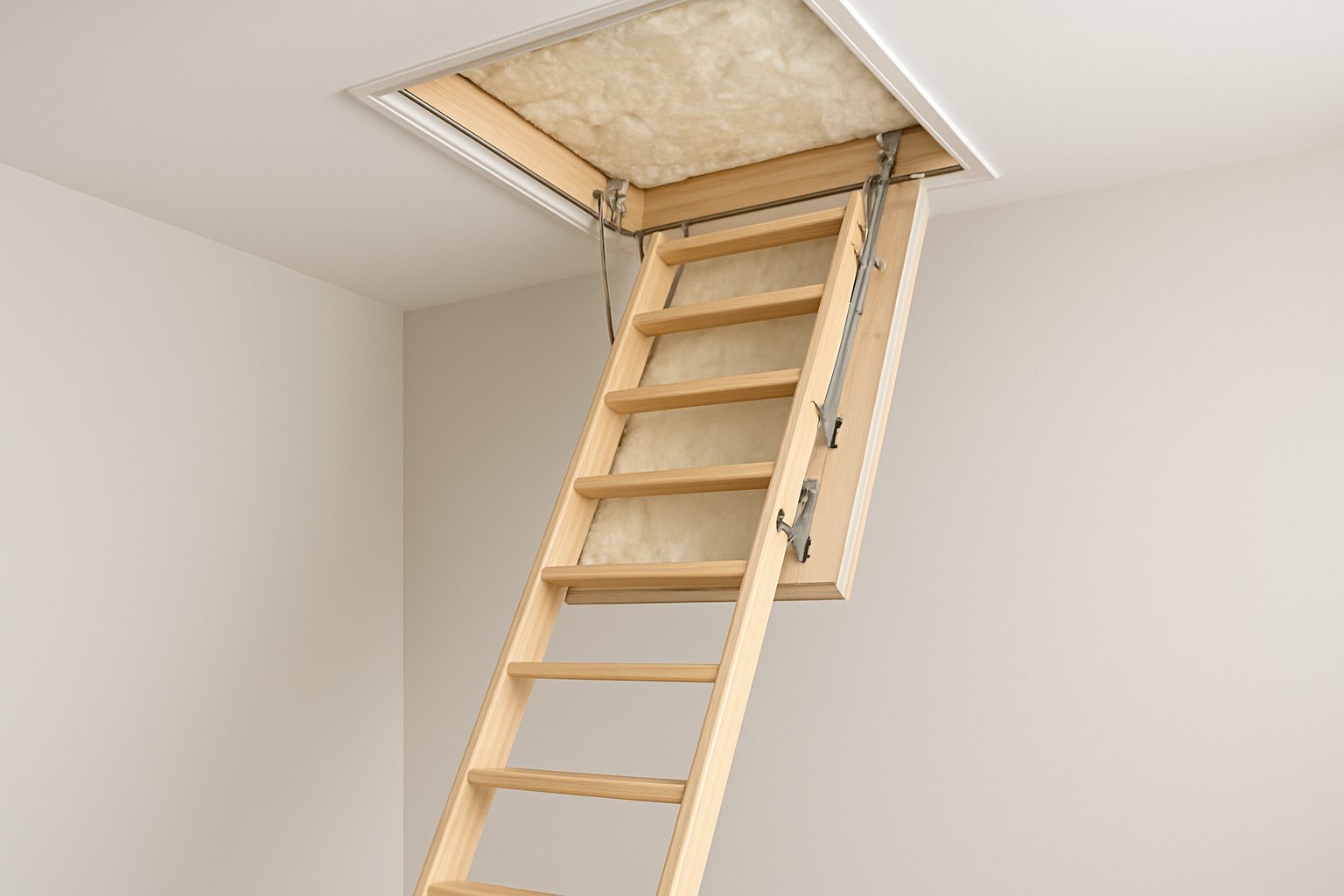
Maintaining a comfortable indoor environment involves more than choosing efficient heating and cooling systems. The loft opening can also influence how well a home retains warmth and manages temperature changes. Modern Loft Ladders can combine convenient upper-level access with insulation-focused construction, helping homeowners create a more energy-conscious living environment. With the right design, the access point can support everyday usability while reducing unnecessary gaps around the loft entrance.
What’s Covered
- In This Article
- In This Article
- In This Article
- Why Does Loft Insulation Matter?
- How Can an Insulated Loft Ladder Improve Comfort?
- What Features Support Better Insulation Performance?
- Does the Hatch Design Make a Difference?
- Can Insulation and Convenience Work Together?
- How Does Installation Influence Performance?
- What Should Homeowners Consider Before Choosing a Design?
- Can Regular Maintenance Preserve Insulation Performance?
- Why Is Energy-Efficient Loft Access a Practical Home Improvement?
- Conclusion
- What You Need to Know
- What You Need to Know
- What You Need to Know
In This Article
- In This Article
- In This Article
- Why Does Loft Insulation Matter?
- How Can an Insulated Loft Ladder Improve Comfort?
- What Features Support Better Insulation Performance?
- Does the Hatch Design Make a Difference?
- Can Insulation and Convenience Work Together?
- How Does Installation Influence Performance?
- What Should Homeowners Consider Before Choosing a Design?
- Can Regular Maintenance Preserve Insulation Performance?
- Why Is Energy-Efficient Loft Access a Practical Home Improvement?
- Conclusion
- What You Need to Know
- What You Need to Know
In This Article
- In This Article
- Why Does Loft Insulation Matter?
- How Can an Insulated Loft Ladder Improve Comfort?
- What Features Support Better Insulation Performance?
- Does the Hatch Design Make a Difference?
- Can Insulation and Convenience Work Together?
- How Does Installation Influence Performance?
- What Should Homeowners Consider Before Choosing a Design?
- Can Regular Maintenance Preserve Insulation Performance?
- Why Is Energy-Efficient Loft Access a Practical Home Improvement?
- Conclusion
- What You Need to Know
In This Article
- Why Does Loft Insulation Matter?
- How Can an Insulated Loft Ladder Improve Comfort?
- What Features Support Better Insulation Performance?
- Does the Hatch Design Make a Difference?
- Can Insulation and Convenience Work Together?
- How Does Installation Influence Performance?
- What Should Homeowners Consider Before Choosing a Design?
- Can Regular Maintenance Preserve Insulation Performance?
- Why Is Energy-Efficient Loft Access a Practical Home Improvement?
- Conclusion
Why Does Loft Insulation Matter?
Heat naturally moves between different areas of a property, and the loft is often one of the most important areas to consider when improving energy efficiency. A well-insulated loft can help maintain a more consistent indoor temperature throughout changing seasons.
The access hatch and ladder assembly are part of this overall arrangement. If the opening is poorly sealed, the benefits of insulation around the surrounding loft area may be reduced. Choosing an access solution with suitable insulation properties can therefore support a more complete approach to household energy management.
How Can an Insulated Loft Ladder Improve Comfort?
An insulated access system can help create a stronger separation between the living area and the loft. During colder periods, this can support heat retention below the loft, while during warmer weather it can help limit unwanted temperature transfer from above.
This can contribute to a more consistent indoor atmosphere. Homeowners may also find that rooms beneath the loft feel more comfortable because the access point is better integrated with the property’s thermal envelope.
What Features Support Better Insulation Performance?
Several design characteristics can contribute to insulation efficiency. A well-fitted hatch, quality sealing, insulated panels, and suitable construction materials can all help reduce unwanted air movement through the loft opening.
The thickness and composition of the insulated section can also influence its thermal performance. A carefully designed assembly should provide a practical balance between insulation, accessibility, durability, and ease of operation.
Does the Hatch Design Make a Difference?
Yes. The hatch is an important part of the access system because it covers the opening when the ladder is stored. A properly fitted hatch can help create a tighter barrier between the loft and the room below.
Good alignment is also valuable. When the hatch closes evenly and the sealing components sit correctly, the access point can provide a more consistent finish while supporting the overall insulation strategy of the property.
Can Insulation and Convenience Work Together?
Modern loft access does not need to sacrifice convenience for energy performance. Well-designed systems can combine compact ladder mechanisms with insulated access panels, allowing homeowners to reach the loft easily while maintaining a strong barrier when the ladder is closed.
Folding and retractable configurations can be especially useful because they provide practical access without requiring permanent floor space. This makes them suitable for homes where both energy efficiency and space management are priorities.
How Does Installation Influence Performance?
Correct installation plays an important role in achieving the expected benefits of an insulated access system. The ladder and hatch should fit the opening accurately, with appropriate sealing around the surrounding structure.
Even a high-quality product can perform less effectively if it is poorly fitted. Careful installation helps ensure that the access mechanism operates smoothly while the insulated elements remain correctly positioned.
What Should Homeowners Consider Before Choosing a Design?
The loft opening dimensions, ceiling height, available floor area, frequency of use, insulation requirements, and surrounding structure should all be assessed. Homeowners should also consider how often the loft will be accessed and whether the space is primarily used for storage or other purposes.
Selecting a design according to these practical factors can help create a balanced solution that supports comfortable access and effective thermal management.
Can Regular Maintenance Preserve Insulation Performance?
Routine checks can help maintain the condition of the access system. Homeowners can periodically inspect seals, hinges, hatch panels, fixings, and moving components for visible changes.
Keeping the hatch clean and ensuring that it closes correctly can also support consistent performance. Addressing minor issues promptly can help preserve both functionality and insulation effectiveness.
Why Is Energy-Efficient Loft Access a Practical Home Improvement?
Improving the loft access point can complement wider efforts to create a comfortable and efficient home. Better insulation performance can support temperature stability, while a convenient ladder makes upper-level space easier to use.
Together, these benefits can help homeowners make more effective use of existing space while creating an access solution that fits naturally into modern home planning.
Conclusion
Loft ladders with strong insulation performance can combine practical accessibility with improved thermal management. Features such as insulated hatch panels, effective sealing, suitable materials, accurate fitting, and dependable construction can all contribute to a more comfortable home environment. By considering both access requirements and insulation needs, homeowners can choose a solution that supports energy-conscious living, efficient use of loft space, and lasting everyday convenience.
What You Need to Know
- Modern loft ladders can improve energy efficiency by combining convenient access with insulation-focused construction.
- A well-insulated loft helps maintain consistent indoor temperatures and reduces heat transfer during seasonal changes.
- Insulated access systems can create a stronger separation between living areas and lofts, enhancing comfort levels in rooms below.
- Design features like a well-fitted hatch and quality sealing are crucial for reducing unwanted air movement through the loft opening.
- Proper installation of loft ladders and hatches is essential for maximizing insulation performance and operational efficiency.
- Homeowners should consider loft dimensions, insulation requirements, and frequency of use when selecting an access design.
What You Need to Know
- The loft opening significantly influences a home’s ability to retain warmth and manage temperature changes.
- Modern loft ladders can provide both convenient access to upper levels and improved insulation features.
- A properly fitted access hatch is crucial for minimizing air movement and enhancing the overall insulation strategy of the property.
- Correct installation of the loft access system is essential for realizing the expected benefits of insulation and functionality.
- Regular maintenance of the access system, including checks of seals and hinges, can help preserve insulation performance.
- Energy-efficient loft access improvements can enhance temperature stability and maximize the usability of upper-level spaces.
What You Need to Know
- The loft opening significantly impacts a home’s ability to retain warmth and manage temperature fluctuations.
- Insulated loft ladders can help maintain a consistent indoor temperature by providing effective separation between living areas and the loft.
- The design of the hatch plays a crucial role in the insulation performance of the access point.
- Proper installation of insulated access systems is essential for achieving optimal thermal benefits and functionality.
- Regular maintenance of the loft access system can help preserve its insulation performance and overall effectiveness.
- Energy-efficient loft access improvements can enhance both comfort and usability in residential spaces.
The Short Version
- The loft opening significantly affects a home’s ability to retain warmth and manage temperature changes.
- An insulated loft ladder can improve indoor comfort by creating a stronger separation between the living area and the loft.
- Design features like a well-fitted hatch, quality sealing, and insulated panels contribute to better insulation performance.
- Correct installation is crucial for maximizing the benefits of an insulated access system, as even high-quality products can underperform if poorly fitted.
- Homeowners should consider dimensions, ceiling height, insulation requirements, and frequency of use when selecting a loft access design.
- Regular maintenance, including inspection of seals and components, can help preserve the insulation performance of loft access systems.